
In the fast-moving arena of Uttar Pradesh politics, few political slogans have shown the flexibility of the three-letter acronym PDA. What began as Samajwadi Party president Akhilesh Yadav’s shorthand for a social coalition has been repeatedly redefined, expanded and contested by both its originator and his rivals. The journey of PDA from “Pichhda, Dalit, Alpsankhyak” to interpretations that now include “Pandit” captures the fluid nature of caste arithmetic and political messaging in the state.
The Original Formulation
When Akhilesh Yadav first popularised PDA around June 2023, it stood for Pichhda (backward classes), Dalit and Alpsankhyak (minorities). The formulation was projected as a broader social coalition capable of challenging the BJP-led NDA. Yadav repeatedly asserted that “PDA hi NDA ko harayega” — it is the PDA that will defeat the NDA. The slogan gained traction in the run-up to the 2024 Lok Sabha elections and was widely credited with helping the Samajwadi Party expand beyond its traditional Yadav-Muslim base and secure a strong performance.
At its core, the original PDA sought to unite Other Backward Classes, Dalits and religious minorities under a single political umbrella. It offered a concise way to signal inclusivity while retaining the party’s long-standing emphasis on social justice.
Akhilesh Yadav’s Own Expansions
Interestingly, the creator of the acronym has never treated its meaning as fixed. Over time, Yadav has broadened the formulation to accommodate additional social groups. The “A” has at times been linked to Aadhi Aabadi, or women, reflecting an effort to highlight gender as part of the coalition. References to Adivasis and even Agde, or forward castes, have also appeared in party messaging.
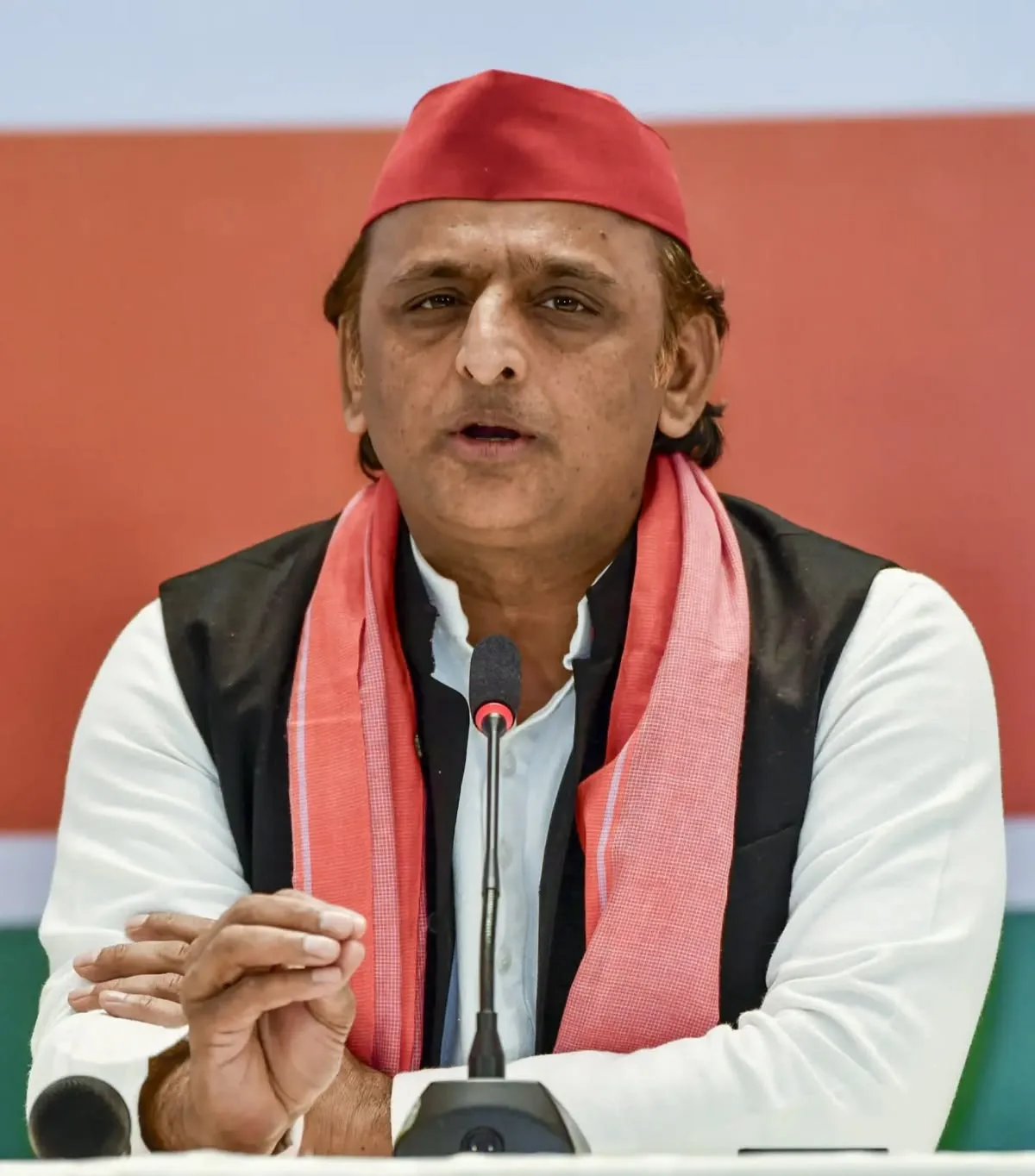
In August 2026, Yadav took the reinterpretation a significant step further. Addressing a Brahmin gathering in Lucknow on the birth anniversary of socialist leader Janeshwar Mishra, he declared that the “PD” in PDA could also stand for Pandit. The remark was widely seen as an explicit outreach to the Brahmin community ahead of the 2027 Uttar Pradesh Assembly elections. Yadav argued that rivals had been inventing new meanings for PDA ever since they lost to it, and claimed they had forgotten that the letters could represent Pandits as well. He linked the idea to the notion that greater “peeda,” or pain, inflicted by the ruling establishment would only strengthen the PDA.
This shift illustrates how the acronym has been adapted to suit evolving electoral calculations. What began as a coalition of backward and marginalised groups has been stretched to signal openness to upper-caste voters without discarding the original constituents.
Rival Interpretations and Political Contests
Political rivals have not remained passive observers. The BJP and its leaders have repeatedly offered alternative expansions of PDA, often with a sharply critical edge. Uttar Pradesh Chief Minister Yogi Adityanath earlier described it in terms that portrayed the Samajwadi Party as associated with disruption. Other BJP functionaries have proposed readings such as “Paraya, Dhan, Apna,” framing the slogan as self-serving rather than inclusive. Social media posts from the party have also sought to highlight perceived inconsistencies, including suggestions that the focus had narrowed to specific communities.
The Bahujan Samaj Party has likewise criticised the shifting definitions. BSP leader Mayawati accused the Samajwadi Party of changing colours like a chameleon for electoral convenience. She argued that the move to interpret “P” as Pandit reflected an attempt to woo Brahmins after noticing their growing engagement with the BSP, and described the change as political deception.
These competing interpretations reveal how thoroughly PDA has entered the state’s political vocabulary. Once a Samajwadi Party slogan, it has become a contested symbol that rivals feel compelled to redefine or ridicule.
The Logic of Flexible Messaging
In Uttar Pradesh’s complex social landscape, political parties constantly recalibrate their appeals. Brahmins have historically been regarded as an influential voting bloc capable of tilting outcomes in key constituencies. By signalling that PDA can include Pandits, the Samajwadi Party appears to be attempting to broaden its coalition without formally abandoning the backward-Dalit-minority core that delivered results in 2024.
At the same time, the repeated reworking of the acronym carries risks. Critics argue that constant redefinition can dilute the original message and create confusion among the very groups the slogan was meant to mobilise. Supporters counter that politics requires adaptation and that an inclusive reading strengthens rather than weakens the coalition.
The Samajwadi Party has continued to centre PDA in its mobilisation efforts, including through a planned statewide yatra. At public events, Yadav has continued to expand the meaning of the letters, sometimes emphasising different communities depending on the audience and context.
A Mirror to UP’s Political Culture
The story of PDA is, in many ways, a reflection of Uttar Pradesh’s political culture. Acronyms and slogans have long served as tools for simplifying complex social alliances into memorable phrases. Once launched, however, they rarely remain under the exclusive control of their creators. Rivals appropriate, parody or redefine them, while the originators themselves adjust the meanings to meet new strategic needs.
From its debut as a concise expression of a social justice coalition to its current status as a flexible and contested political signifier, PDA has demonstrated remarkable adaptability. Whether the inclusion of “Pandit” helps the Samajwadi Party expand its support base in 2027, or whether the shifting definitions become a liability, will be tested at the ballot box. For now, the acronym remains a live element of the state’s political conversation, continually reshaped by the very competition it was designed to influence.
In the end, PDA’s journey from Pichhda to Pandit shows how language in politics is rarely static. In Uttar Pradesh, even three letters can carry multiple histories, competing claims and evolving ambitions.
Read more – Trubondlife.com
