
FIFA has accused UEFA of conducting a smear campaign against its president, Gianni Infantino, through legal filings in United States courts. The dispute centres on a now-abandoned proposal to sell commercial rights linked to the World Cup and other major competitions. FIFA’s response in court describes UEFA’s applications as little more than press releases designed to damage the organisation and its leadership, intensifying an already bitter conflict ahead of the 2027 presidential election.
The Shelved Commercial Rights Proposal
Earlier in 2026, FIFA advanced a plan known as FIFA Forward Enterprise. Under the proposal, a new subsidiary would have held commercial and event rights connected to the men’s and women’s World Cups and the Club World Cup. Private investors were to acquire a minority stake, reported at around 20 percent, for approximately 4.2 billion dollars, implying a valuation of roughly 20 billion dollars for the entity.
The plan was unveiled and then rapidly withdrawn after widespread criticism from confederations, member associations and other stakeholders. Critics argued that the process lacked proper consultation with FIFA’s Council, regional bodies and the full membership. UEFA was among the strongest opponents, contending that the proposal bypassed established governance safeguards and undervalued the rights involved.
UEFA’s Legal Moves in the United States
In late August 2026, UEFA filed applications in several US federal courts seeking discovery of documents and testimony. The requests targeted FIFA-related entities and associated parties connected to the commercial rights plan. UEFA stated that the material was needed in preparation for potential criminal proceedings in Switzerland, where FIFA is headquartered.
In those filings, UEFA alleged that the proposal had been developed by a small circle around Infantino without adequate oversight and that the valuation raised serious questions. European football’s governing body indicated it was considering claims of criminal mismanagement under Swiss law against Infantino and possibly other officials or advisers.
FIFA’s Court Response
FIFA filed a formal response in a New York court rejecting UEFA’s approach. The organisation stated that while the applications carried the appearance of ordinary legal pleadings, they functioned primarily as vehicles for public messaging. FIFA described them as part of a broader smear campaign directed at the organisation and its leadership.
FIFA’s lawyers argued that the requests suffered from a fundamental defect: they sought evidence in support of a foreign criminal proceeding that had not been initiated and that UEFA lacked the authority to commence. The response maintained that any disagreements over commercial strategy or governance should be addressed through football’s internal democratic processes rather than external courts.
FIFA further contended that UEFA’s actions were motivated by a desire to protect its own competitions and influence rather than by genuine concern for the wider game. The filing characterised the legal manoeuvres as an attempt to achieve through litigation and publicity what UEFA could not accomplish through the support of FIFA’s member associations.
Escalating Institutional Tensions
The commercial rights controversy has deepened existing strains between FIFA and UEFA. European football’s governing body had already expressed a loss of confidence in Infantino’s leadership and raised the possibility of boycotts of FIFA competitions. Other confederations and national associations have voiced varying degrees of support or criticism, creating a fragmented landscape within world football’s governance structures.
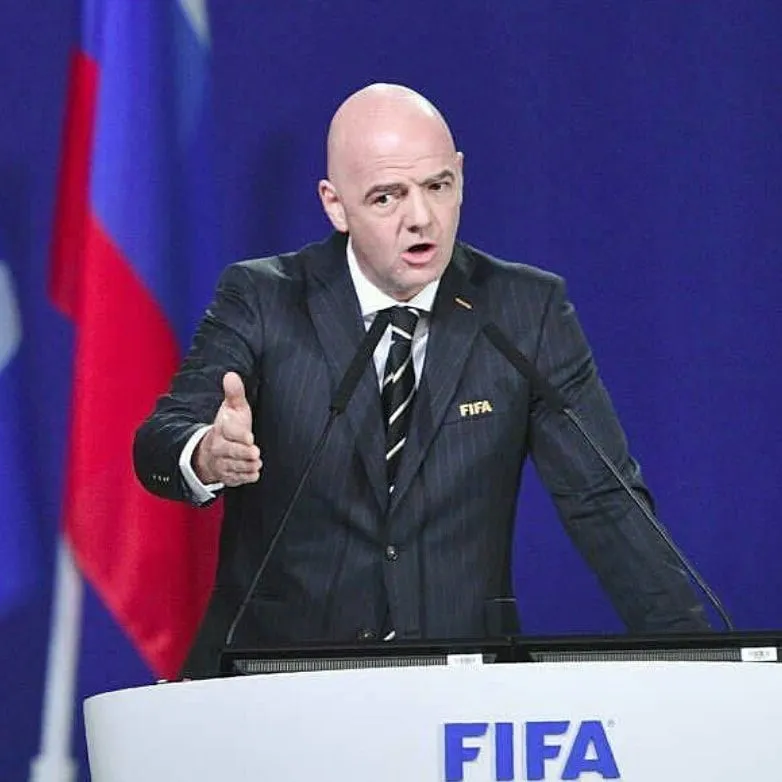
Infantino, who is expected to seek another term in the 2027 election, has faced sustained pressure since the proposal became public. FIFA’s senior leadership has publicly reaffirmed support for the president following internal discussions, while emphasising that mistakes were acknowledged in the handling of the commercial plan. At the same time, the organisation has insisted that any challenge to the presidency must follow the statutes and established electoral procedures.
Broader Context of the Dispute
The row reflects deeper disagreements about the commercialisation of football’s most valuable assets, the balance of power between FIFA and the confederations, and the appropriate limits of executive authority. UEFA has positioned its opposition as a defence of collective ownership and proper governance. FIFA has framed the criticism as an effort to undermine a leadership that still commands support among a majority of member associations outside Europe.
Legal proceedings in the United States remain at the discovery stage. No criminal case has been formally opened in Switzerland on the basis of the material currently available. Both sides continue to exchange public statements and legal arguments, keeping the conflict highly visible.
Implications for Football Governance
The episode underscores the fragility of consensus within global football administration. A proposal intended to unlock commercial value instead triggered institutional confrontation, legal manoeuvring across jurisdictions, and open accusations of bad faith. The coming months will test whether the dispute can be contained within football’s own structures or whether external courts and public campaigns will continue to shape the narrative.
For Infantino, the combination of the abandoned commercial plan and the current legal exchanges has raised the stakes of the 2027 election. For UEFA, the strategy of seeking evidence through US courts and signalling possible Swiss criminal action represents a significant escalation. FIFA’s characterisation of these steps as a smear campaign makes clear that the organisation views the conflict as political as much as legal.
As the two most powerful bodies in world football trade accusations, the wider membership and the sport’s commercial partners are left watching a governance crisis that shows little sign of rapid resolution. The outcome will influence not only the future of FIFA’s leadership but also the relationship between the global governing body and its European counterpart for years to come.
Read more – Blessingread.com , pfptrends.com
