
India’s cultural landscape has long captivated travellers with its monuments, traditions and living heritage. A recent global ranking has now placed one of its modern institutions firmly on the international stage. The Bihar Museum in Patna has secured the ninth position on the World’s 100 Best Museums list compiled by the Germany-based independent travel guide Worth a Journey for 2026. It stands as the highest-ranked museum in Asia and the only Indian entry on the entire list, placing it ahead of New York’s Metropolitan Museum of Art and well above the Louvre in Paris.
A Landmark Ranking for an Indian Institution
The Worth a Journey ranking evaluates museums of art, history, archaeology, science, technology and open-air heritage. Its methodology combines data analysis with verification through visits. In the 2026 list, Mexico City’s Museo Nacional de Antropología occupies the top spot, followed by Spain’s Museo del Prado and Denmark’s Louisiana Museum of Modern Art. The State Hermitage Museum in Saint Petersburg, Vienna’s Kunsthistorisches Museum and Turkey’s Şanlıurfa Archaeology Museum also feature among the leading institutions. Two Second World War museums, one in Gdańsk and one in New Orleans, sit just above the Bihar Museum, while the Metropolitan Museum of Art follows immediately after it at tenth place. The Louvre ranks significantly lower at 31st.
For a museum that opened only in the mid-2010s, the ninth-place global ranking and first place in Asia represent a notable achievement. It draws fresh international attention to Patna and to Bihar’s deep historical layers.
Architecture and Setting of the Bihar Museum
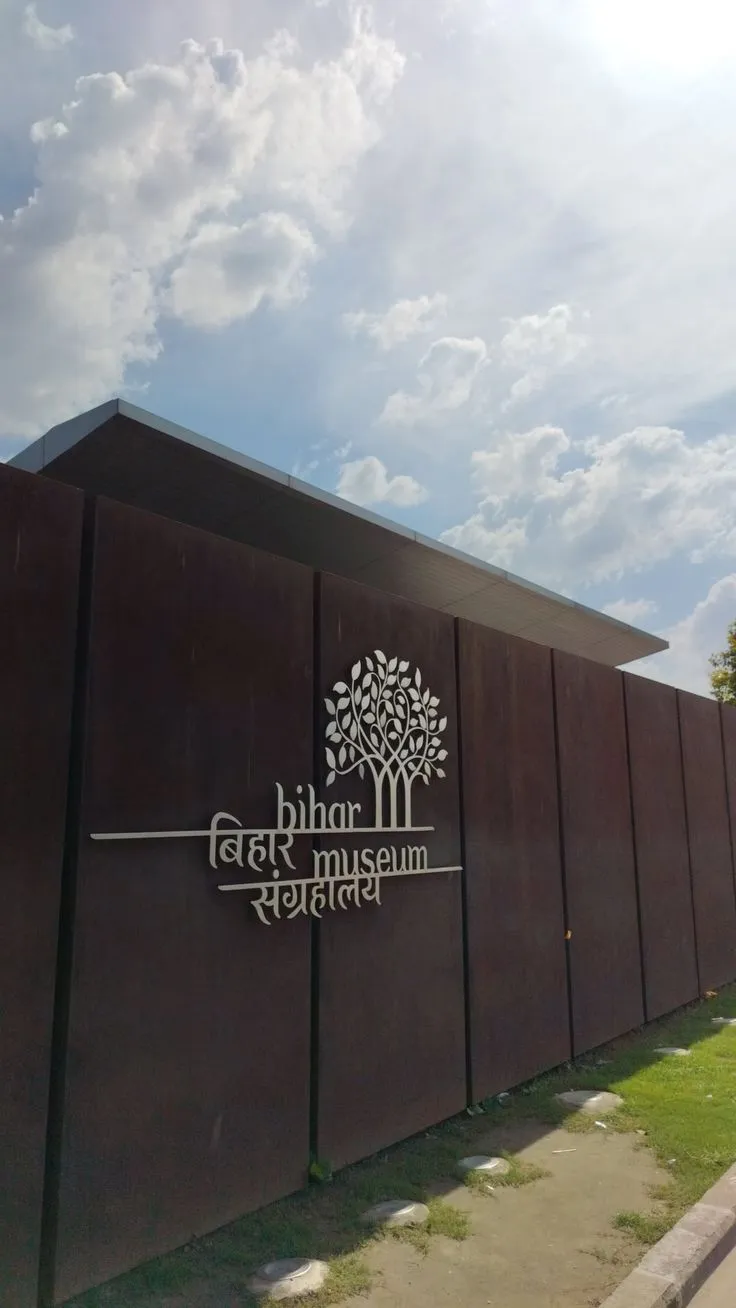
Spread across more than 13 acres on Bailey Road in Patna, the Bihar Museum was designed by Japanese Pritzker Prize-winning architect Fumihiko Maki in collaboration with Mumbai-based Opolis Architects. The building is contemporary in character, with spacious galleries, open courtyards and carefully considered visitor pathways. Its modern form provides a fitting setting for the presentation of ancient and historical material, creating an environment that feels both accessible and dignified.
The museum was conceived as a state-of-the-art institution capable of showcasing Bihar’s heritage at an international standard. Its architecture supports clear storytelling, allowing visitors to move through chronological and thematic sequences without feeling overwhelmed.
Collections That Trace Bihar’s Long History
The museum’s holdings span a wide chronological range, beginning with the earliest civilisations and extending through successive historical periods. Artefacts, sculptures, coins, manuscripts and other objects illustrate the region’s political, religious and cultural development. One of the best-known pieces associated with the collection is the Mauryan-era Didarganj Yakshi, a celebrated example of early Indian sculpture discovered near Patna.
Beyond classical archaeological material, the museum also presents traditional and folk art forms alongside contemporary expressions. This combination allows visitors to see continuity as well as change in the cultural life of Bihar. Children’s galleries and interpretive displays further broaden the institution’s appeal, making complex history approachable for younger audiences and first-time visitors.
The narrative focus remains on Bihar itself—its ancient capitals, empires, artistic traditions and later historical transitions—while situating that story within the wider Indian and Asian context.
Why the Ranking Matters
Global museum lists influence travel choices and shape perceptions of cultural destinations. A high ranking can encourage international visitors to include a city or region that might otherwise remain off the standard tourist circuit. For Patna and Bihar, the recognition arrives as an opportunity to highlight archaeological richness that extends far beyond the better-known sites of the Gangetic plain.
The achievement also reflects careful institutional planning. Building a museum of this scale and quality required long-term investment in design, conservation, curation and public programming. The ranking affirms that those efforts have produced an institution capable of competing on a global stage.
Local responses have underscored the sense of pride. Officials associated with the museum have described the recognition as validation of the original vision to create a world-class facility dedicated to the state’s heritage. The ranking is expected to support broader cultural tourism initiatives and to strengthen Patna’s profile as a destination for history and art.
Visiting the Museum and Looking Ahead
The Bihar Museum operates as a public cultural space with galleries designed for both deep engagement and more casual exploration. Its combination of landmark architecture, significant collections and clear narrative structure makes it suitable for a range of visitors, from specialists to families.
As international awareness grows, the institution is likely to see increased interest from travellers already exploring India’s cultural circuit. The ranking may also encourage greater collaboration with other museums and further investment in conservation and interpretation.
For India as a whole, the result demonstrates that excellence in museum practice is not confined to the largest metropolitan centres. A thoughtfully designed and well-curated institution in Patna has earned a place among the world’s most highly regarded museums, ahead of several long-established names. That outcome invites both celebration and continued commitment to the careful presentation of the country’s layered past.
The Bihar Museum’s ninth-place ranking stands as a reminder that cultural institutions succeed when architecture, collections and storytelling work together. In placing Bihar’s heritage on a global list, it offers visitors a compelling reason to discover a chapter of Indian history that is both ancient and newly visible on the world stage.
Read more – marathibhashaa.com
