
The “Dugga Dugga” chants echo through the streets, the fragrance of shiuli hangs in the air, and Kolkata’s grand pandals draw lakhs of visitors each year. Durga Puja in West Bengal is widely known for its spectacular public celebrations—elaborate themes, artistic installations, dhunuchi dances, new clothes and festive feasts. Yet beyond the crowds and the lights lies another, older story. Inside the courtyards of ancestral homes, a quieter and more intimate tradition continues, one that has been passed down through generations of Bengal’s aristocratic and merchant families.
The Roots of Household Worship
Long before community pandals became the face of the festival, Durga Puja was primarily a family affair. Wealthy zamindars, merchants and aristocratic households hosted the goddess in their own thakur dalans—the pillared courtyards specially built for worship. These celebrations, known as Bonedi Barir Pujo, date back several centuries. Some of the oldest continue uninterrupted even today.
One of the earliest documented household pujas is that of the Sabarna Roy Chowdhury family in Barisha, traditionally dated to 1610. The family’s Aatchala Bari remains a living link to a time before Kolkata itself took shape. Other historic households, such as those in Shobhabazar, Chorbagan, Pathuriaghata and Jorasanko, carry forward traditions that began in the seventeenth and eighteenth centuries. These homes preserve not only rituals but also architectural spaces, recipes, idol styles and customs unique to each lineage.
Distinct Rituals and Personal Traditions
What sets these family pujas apart is their individuality. Every bonedi bari follows its own set of practices. Some offer 108 aparajita flowers instead of the more common lotuses. Others feature distinctive idol forms—Durga seated on a lotus with companions Jaya and Bijaya, or adorned with elaborate family jewellery. In certain households, the sequence of rituals, the nature of the bhog, or the rules around participation by family members differ from the standard public form.
The atmosphere inside these homes is markedly different from the public spectacle. The focus remains on continuity, ancestry and the intimate relationship between the family and the goddess. Many still prepare the idol within the premises, follow age-old methods of bodhan, and maintain specific dietary and ritual observances during the five days. Women of the household often play central roles in preparations and certain rites, reflecting both tradition and evolving family structures.
Architecture, Memory and Continuity
The ancestral houses themselves form an essential part of the experience. Many retain their original thakur dalans, courtyards and residential wings that have witnessed centuries of celebration. Walking into these spaces during Puja offers a sense of stepping into a living archive. The same pillars, the same courtyards and, in some cases, the same family priests and artisan lineages continue the work year after year.
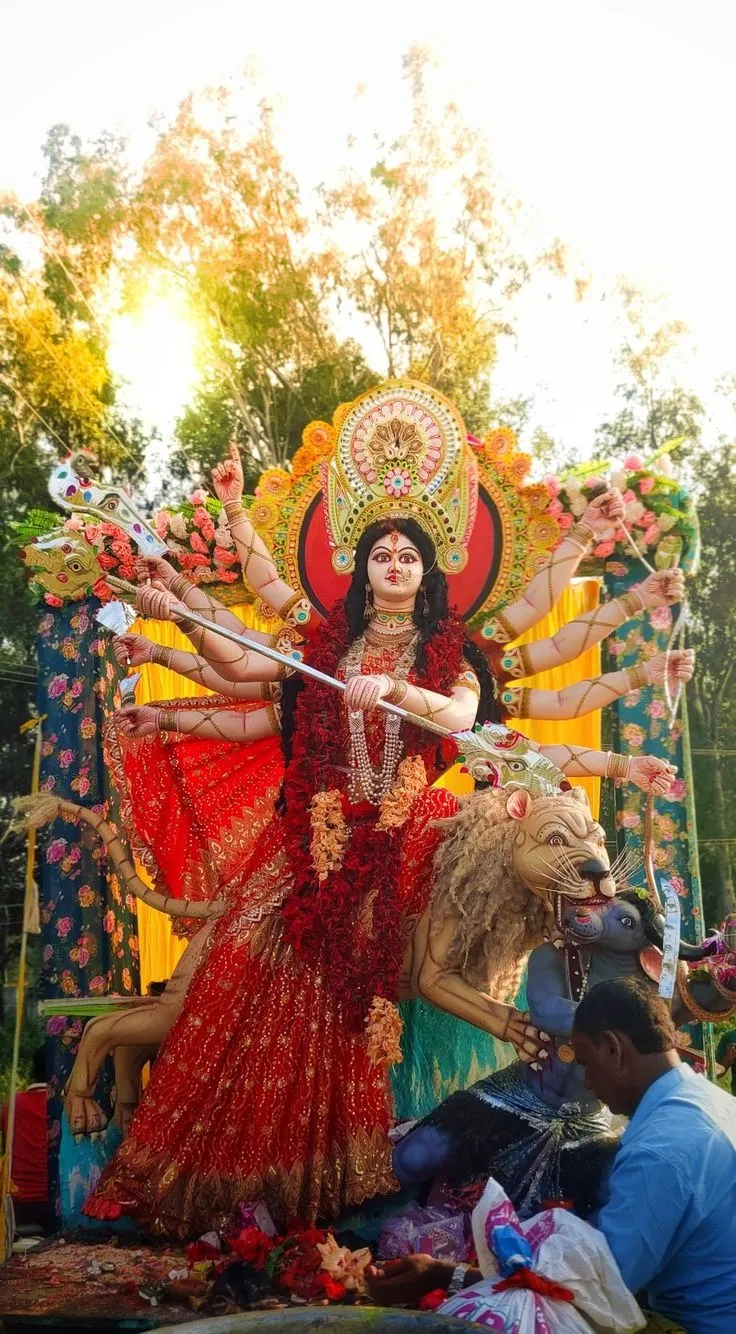
These households also serve as repositories of social history. In the colonial period, grand family pujas were occasions for cultural display, hospitality and networking. European guests were sometimes invited, and the scale of the celebrations reflected both devotion and status. Over time, as community sarbojanin pujas grew in scale and accessibility, the household tradition became quieter and more inward-looking, yet it never disappeared.
A Living Heritage Amid Modern Celebrations
Today, the public face of Durga Puja—recognised by UNESCO as an Intangible Cultural Heritage—dominates popular imagination. Themed pandals, artistic innovation and mass participation define the festival for most people. Yet the bonedi bari pujas continue alongside this modern form, offering a different rhythm and a different emotional register.
For the families who maintain them, the festival remains a homecoming. Members travel from across the country and abroad to participate in rituals that link them to ancestors and to the physical space of the family house. The goddess is welcomed not only as a deity but as a returning daughter, and the household reorders itself around her presence for those few days.
Visitors who seek these celebrations often find them through heritage walks or local knowledge rather than large public announcements. Some households open their courtyards selectively, allowing outsiders a glimpse of the older style of worship. The experience is less about spectacle and more about atmosphere—the quiet intensity of ritual, the continuity of custom, and the sense of time layered within the walls.
Why This Tradition Matters
In an era when festivals increasingly move into public and commercial spaces, the persistence of household Durga Puja serves as a reminder of the festival’s private and familial origins. It shows that devotion can be sustained without large crowds or elaborate themes. It also preserves specific regional and family variations that might otherwise fade.
These celebrations keep alive particular styles of idol-making, specific culinary offerings, unique ritual sequences and oral histories that do not always find space in the larger public narrative. They demonstrate that Bengal’s Durga Puja is not a single story but a collection of overlapping ones—some loud and collective, others quiet and continuous.
The Dual Character of the Festival
As the dhaak beats and the shiuli blooms once more, the city will once again fill with light and movement. Millions will move from pandal to pandal, admiring creativity and craft. At the same time, inside certain ancestral courtyards, the same goddess will be welcomed according to rules set down generations earlier. Both forms belong to Bengal. One expresses the festival’s capacity for reinvention and collective joy. The other safeguards its memory, intimacy and depth.
Beyond the familiar circuit of pandal-hopping, therefore, lies another Durga Puja story—one told in the language of courtyards, family priests, inherited recipes and unbroken annual returns. It is quieter, older and still very much alive.
Read more – insurancesach.com
